
Bike Ride Calc
 (5/1)
(5/1)

Description
Bike Riding Energy Calculator
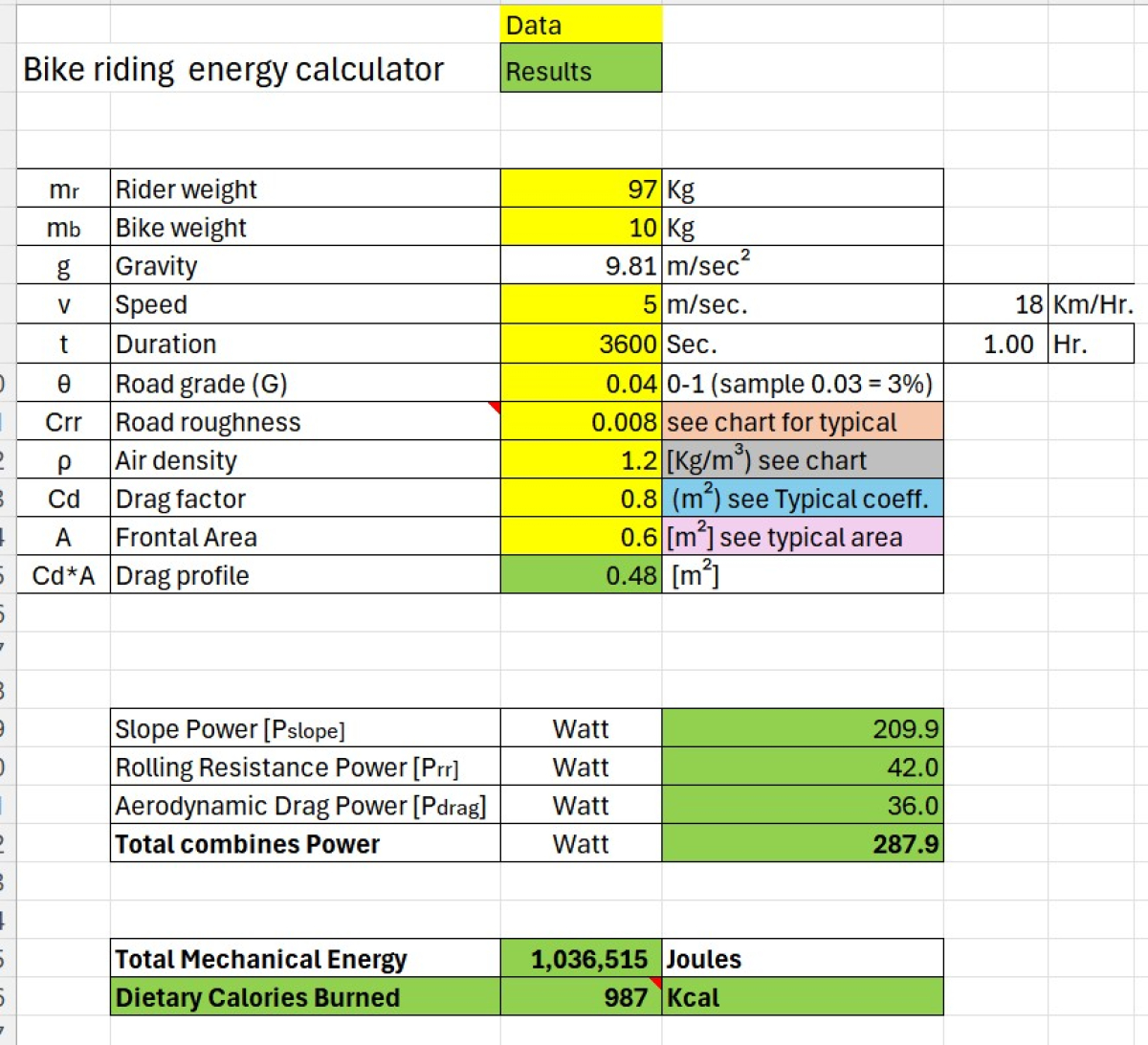
This workbook estimates the mechanical power a cyclist must produce to maintain a given speed, then converts that power into the total energy and dietary calories burned over the duration of a ride. It is a handy tool for cyclists, coaches and students wanting to understand where their effort goes.
Method
The total power demand at the wheel is split into three physical components, each calculated from the user inputs:
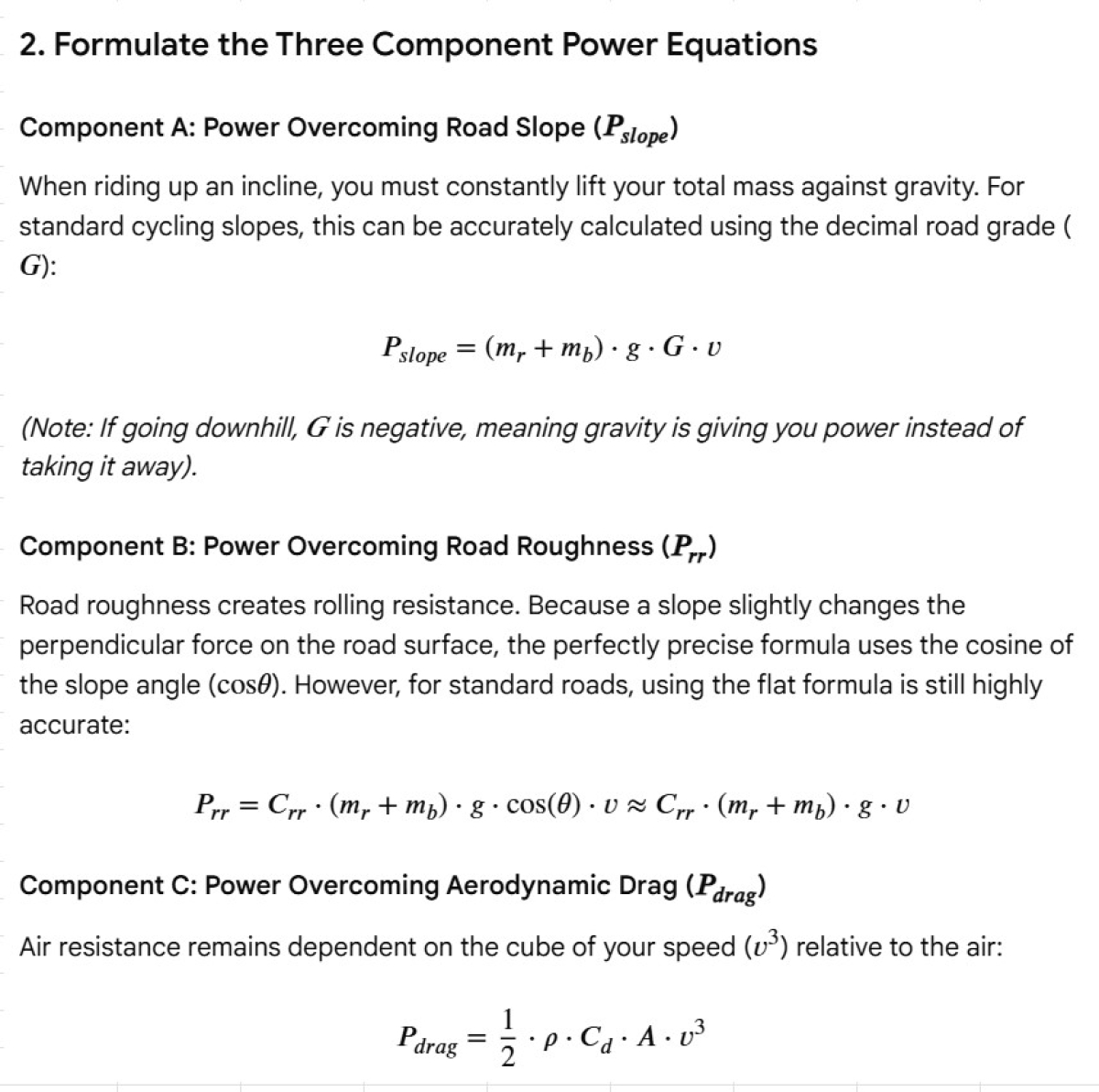
- Slope power – the power needed to lift the combined rider and bike mass up the road grade: Pslope = (mr + mb) · g · G · v
- Rolling resistance power – the power lost to tyre and road friction: Prr = Crr · (mr + mb) · g · v
- Aerodynamic drag power – the power needed to push through the air, which rises with the cube of speed: Pdrag = ½ · ρ · (Cd · A) · v³
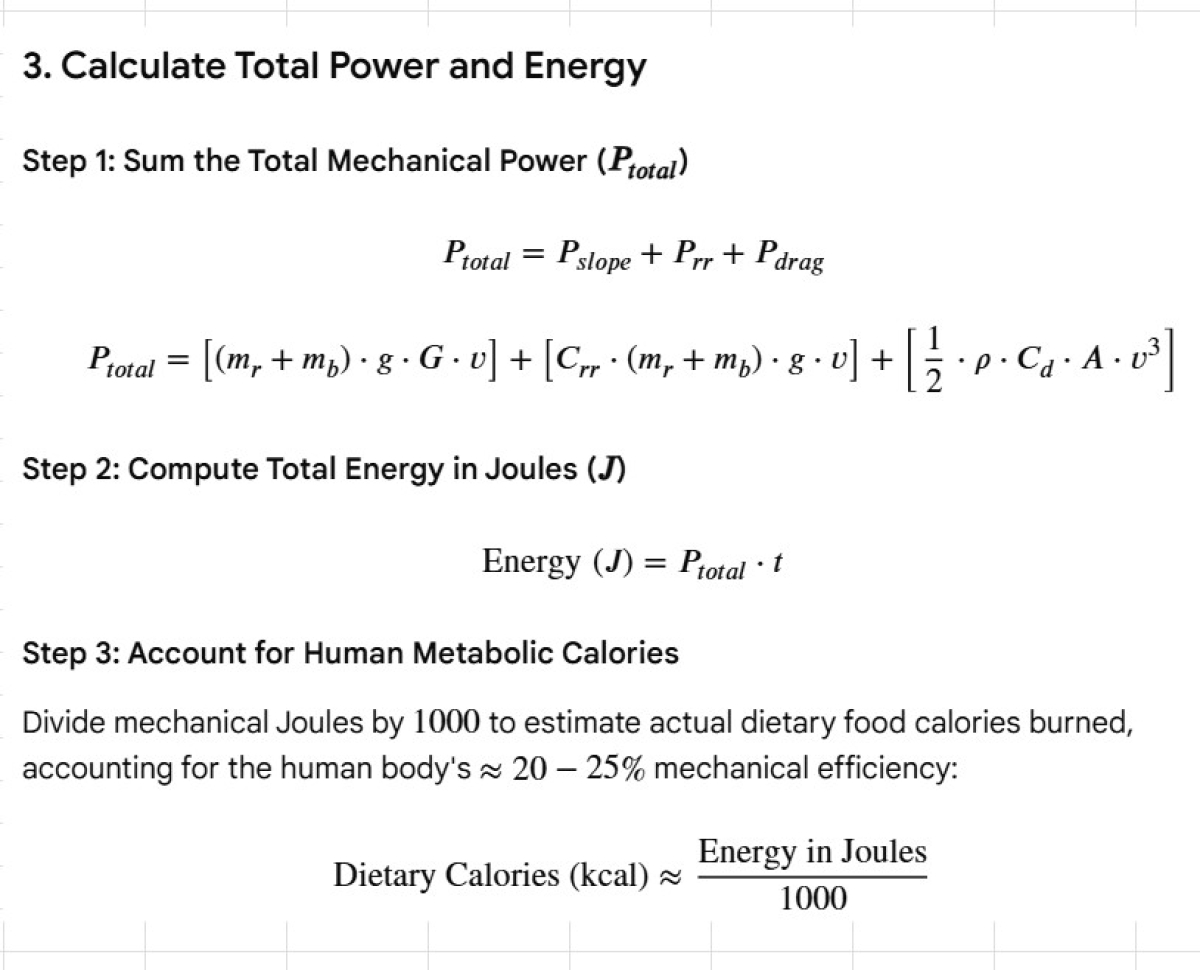
The three components are summed to give the total mechanical power. This is multiplied by the ride duration to give the total mechanical energy in Joules, which is then divided by 1,050 to give dietary calories (kcal). The factor of 1,050 reflects the human body being roughly 25% efficient at converting food energy into mechanical work (~25% of 4,184 J per kcal).
Inputs
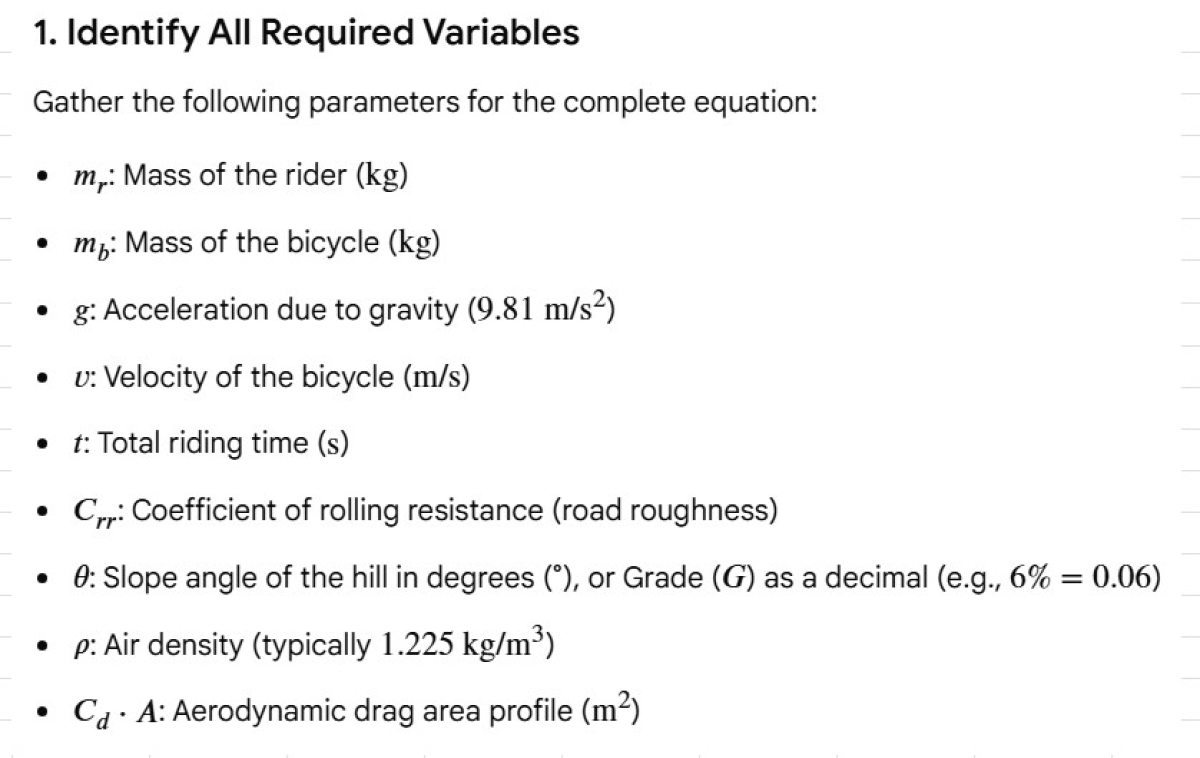
- Rider weight and bike weight (kg)
- Speed (m/s, also shown in km/h) and ride duration (s, also shown in hours)
- Road grade G (e.g. 0.04 = 4%)
- Rolling resistance coefficient Crr
- Air density ρ (kg/m³)
- Drag coefficient Cd and frontal area A (m²)
Outputs
- Slope, rolling resistance and aerodynamic drag power (W)
- Total combined power (W)
- Total mechanical energy (Joules)
- Dietary calories burned (kcal)
Reference data
Built-in lookup tables provide typical values for the drag coefficient (upright vs. aero position), frontal area, air density as a function of elevation, and rolling resistance coefficients for a range of tyre and road surfaces, so realistic inputs can be selected quickly.
Note: the slope term uses the road grade G directly as an approximation, which is accurate for the small-to-moderate gradients typical of road cycling.
Calculation Preview
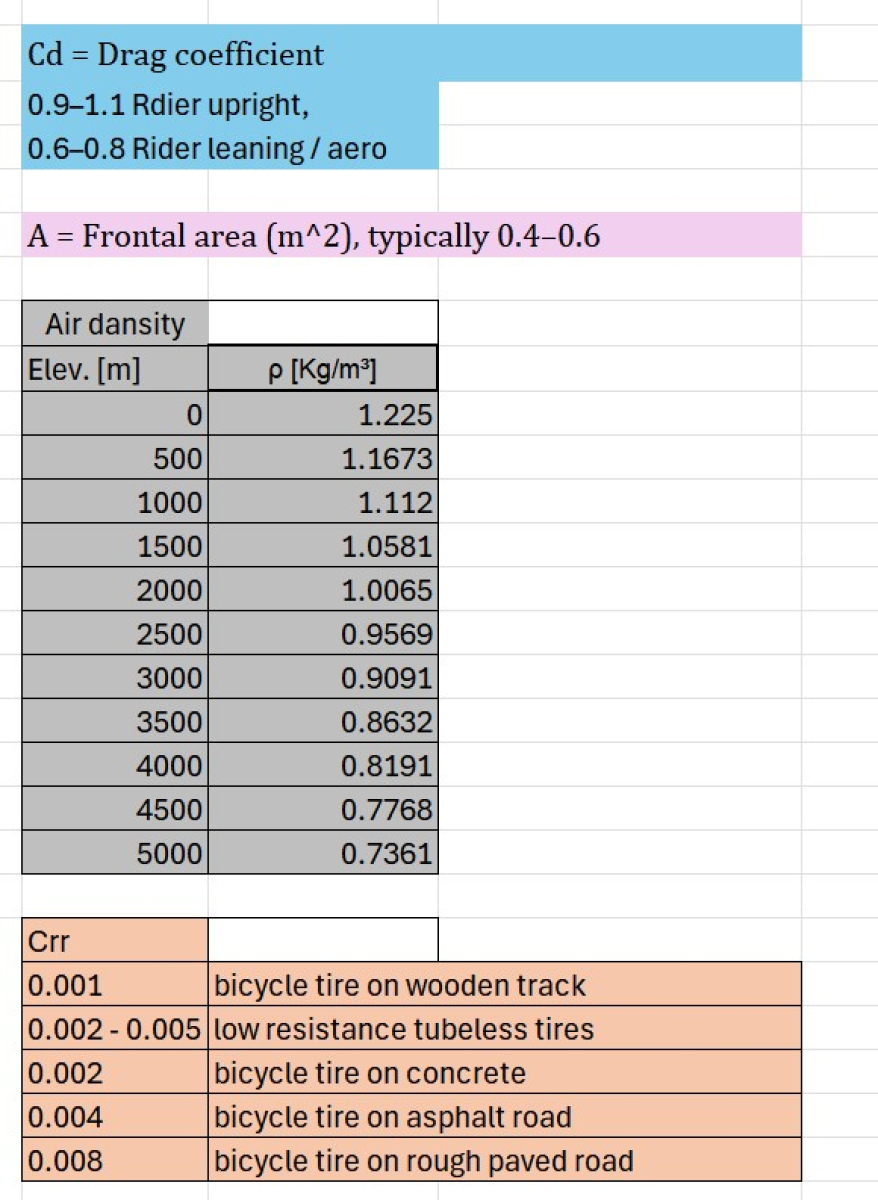 (5/1)
(5/1)
Full download access to any calculation is available to users with a paid or awarded subscription (XLC Pro).
Subscriptions are free to contributors to the site, alternatively they can be purchased.
Click here for information on subscriptions.